Categories:
Fire Safety
| Published on: July 17, 2026
You wouldn’t wait a full year to check your car’s oil just because it passed an inspection once. The same logic applies if you own or run a commercial building in Calgary or Edmonton. The annual fire inspection covers a lot, but it’s not the whole picture, and the stuff that falls through the cracks in between is exactly what this checklist covers.
By the end of this, you’ll know the ten things worth a look every month, why each one matters, and what’s actually protecting your building in the gaps between those yearly visits.
We’re Activate Fire Safety, and we’ve provided commercial fire protection and fire safety services across Calgary and Edmonton since 2004, inspecting more than 20,000 buildings along the way. So this list comes from what we actually run into on site, not a copy-paste code summary.
Why Fire Protection Services Can’t Stop at the Annual Inspection
First, though, here’s something that catches a lot of business owners off guard. A burst pipe, a break-in, or a slip in the parking lot can get an insurance claim denied for reasons that have zero to do with what actually happened. A lot of commercial property policies, including plenty written for Alberta businesses, include what insurers call a protective safeguards clause, basically a warranty that your sprinkler system, alarm, and suppression equipment stay in full working order at all times. Break that warranty, even in a way that has nothing to do with the loss you’re claiming, and an insurer can have grounds to deny the whole thing. Worth asking your broker how yours is worded.
There’s a second wrinkle, too. That annual inspection only proves what existed on the day the technician was standing in your building. It doesn’t say a thing about the valve someone closed the following week, or the panel that started throwing a fault three months later. That’s exactly the gap this list is meant to cover.
Your Monthly Fire Safety & Prevention Services Checklist
- Fire Extinguishers
Walk the building and actually look at each one. Gauge in range, pin and seal still there, nothing shoved in front blocking access. NFPA 10 wants this done monthly, and it’s a completely different job from hydrostatic testing, which runs on its own five- or twelve-year cycle depending on the extinguisher type.
- Emergency Lighting and Exit Signs
Same idea but different test. Hold the button for 30 seconds and watch for dimming as the unit switches to battery power. The annual version runs a full 90 minutes instead, because that’s actually how long it takes to prove the battery can get people out during a real outage.
- Fire Alarm System
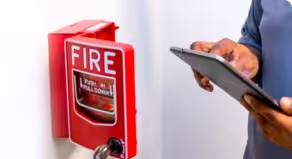
Here’s one that’s easy to forget, since it doesn’t look broken from across the room. Check the panel for trouble lights or supervisory signals, and make sure pull stations stay visible. We’ve seen panels flashing a fault for weeks straight simply because nobody had been assigned to check.
- Sprinkler Control Valves and Gauges
This is the one behind most sprinkler failures, and it’s rarely dramatic. Someone closes a valve during unrelated maintenance and just never gets around to opening it back up, so confirm valves sit fully open, locked or supervised, leak-free, with gauges reading normal.
- Kitchen Hood Suppression System
If you’re running a restaurant, you need to add nozzles, fusible links, and hood filters to your monthly walk. Grease builds up fastest in the weeks between the certified semi-annual service NFPA 96 requires, which is exactly why this one can’t wait for the technician.
- First Aid Kits and Eyewash Stations
Kits need a monthly look for anything expired or missing, simple enough. Eyewash stations are stricter, though, since ANSI Z358.1 wants a weekly flush rather than a monthly one. This is because stagnant water in the line turns into a contamination risk within days.
- Fire Doors and Egress Routes
Nobody mentally files this under “fire protection system,” but it might matter more than half the ones that are. Doors need to close and latch on their own, and the path out needs to stay clear of whatever got shoved there during a busy week.
- Storage Clearance Around Fire Equipment
Sprinkler heads need about eighteen inches of clearance underneath them. Extinguishers, pull stations, and panels all need to stay reachable too, and almost every violation here traces back to a busy receiving day, not actual neglect.
- Fire Hose Cabinets
Quick one if you’ve got them installed. Cabinet opens properly, hose sits racked without damage, everything’s still clearly marked.
- Fire Safety Plan Postings
Last on the list. Check that the posted evacuation routes and floor diagrams still match how the building actually looks, not how it looked before your last renovation.
How Activate Fire Safety Approaches Fire Protection Services in Canada
None of this announces itself. It just sits quietly until the day it doesn’t, and by then the paper trail’s often the only thing standing between your business and a denied claim.
Doing this yourself every month is totally doable; most owners do exactly that. Where it gets trickier is keeping track of annual and multi-year deadlines across a dozen systems, plus juggling separate contractors on separate schedules, which is still the common setup across a lot of fire protection services in Canada. That’s the part we built our team at Activate Fire Safety to handle differently, one CFAA-certified crew covering fire safety & prevention services on a single coordinated schedule instead. If it’d help to have someone double-check the professional side of things, book a free inspection quote with our team, and we’ll take it from there.
Want to go deeper on why the annual side matters just as much as the monthly side? Read our post on Importance of Fire System Inspections in Commercial Buildings.
FAQs About Monthly Fire Protection Inspections
Can a fire protection gap really void a claim unrelated to fire?
Depends on your policy wording, but plenty of commercial policies include protective safeguards clauses treated as warranties, and breaching one can affect coverage even for an unrelated loss. Check your policy or ask your broker.
Do these monthly checks need a certified professional?
Nope. They’re visual checks that any building staff or owner can do themselves, while certified technicians handle the annual and multi-year testing on top.
Does a business with only one or two extinguishers still need to do this?
Yep. The monthly visual requirement under NFPA 10 and the Alberta Fire Code applies per extinguisher, regardless of building size.
Can Activate Fire Safety help track when these checks are due?
Yes. We track extinguisher, alarm, and sprinkler service intervals and send automated renewal reminders so nothing slips through the cracks.