



Categories:
Fire Safety
| Published on: November 16, 2026
Before we get into the differences between fire hydrant repair and testing, let’s quickly look at what each service involves. Both are vital for keeping private fire hydrants in working order, but they’re very different. Testing establishes how the hydrant performs, particularly in terms of pressure, flow, and drainage. Repair focuses on fixing mechanical components, such as leaking valves, damaged parts, or problems with the operating mechanism.
A hydrant can have all the right mechanical components and still deliver less water than the property requires. Equally, it could produce acceptable flow during a test but have a damaged valve or drain that needs attention. That’s why Activate Fire Safety offers Fire Hydrant Testing Services and Edmonton Fire Hydrant Repair to commercial and industrial property owners who need to understand what their hydrants actually require.
What Happens During Fire Hydrant Testing?
Think of hydrant testing as a way to find out what the water supply can deliver. A quick look at a hydrant won’t tell you whether it can provide the required amount of water during a fire. You have to test it under actual flow conditions.
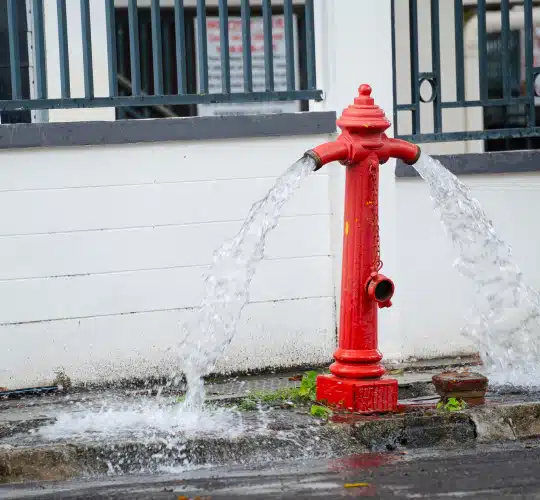
During Fire Hydrant Testing, technicians take pressure readings and measure available flow. Two important measurements are static pressure and residual pressure.
Static pressure is the pressure in the system when no water is flowing through the hydrant. Residual pressure is measured while water is being discharged. Comparing the two readings shows how the system behaves when water is drawn.
Technicians can also use a calibrated Pitot gauge to measure velocity pressure at the hydrant outlet and calculate the flow rate in gallons per minute (GPM). This helps establish whether the water supply can meet the property’s fire protection requirements.
For example, imagine a commercial property where a hydrant shows reasonable static pressure but experiences a significant drop when water starts flowing. This could indicate a restriction in the supply, such as a partially closed valve, an obstruction in the underground piping, or another issue affecting water availability. Further investigation would be needed to locate the cause.
Testing also involves checking the hydrant’s physical condition, including its outlets, caps, threads, gaskets, and operating mechanism. For dry-barrel hydrants, drainage is particularly important because water left inside the barrel can freeze during winter.
What Does Fire Hydrant Repair Involve?
While testing checks the hydrant’s performance, repair work focuses on components that aren’t working properly. A hydrant has several mechanical parts that must work together when it is opened or closed. Damage to any one of them can make operation difficult or cause leaks.
Edmonton Fire Hydrant Repair can involve anything from replacing a worn seal to repairing a damaged operating assembly. The work required depends on the hydrant’s design and the condition of its components.
Here are some common examples:
- Main valve seat replacement: The main valve seat seals when the hydrant is closed. If it wears or becomes damaged, water may continue leaking through the hydrant.
- Drain mechanism repairs: Dry- barrel hydrants have a drainage mechanism that empties the barrel after use. Blocked drain openings or faulty internal components can leave water trapped inside.
- Breakaway section repairs: Hydrants near parking areas, loading bays, and access roads can be struck by vehicles or heavy equipment, potentially damaging the breakaway section or internal operating components.
- Operating stem and nut repairs: The operating stem connects the external operating nut to the internal valve assembly. Corrosion or physical damage can make the hydrant difficult to open and close.
Not every repair requires replacing the entire hydrant. In many cases, replacing individual parts or servicing the affected assembly is enough. The right solution depends on the extent of the damage and the availability of suitable components.
Fire Hydrant Testing vs. Fire Hydrant Repair: What’s the Difference?
The easiest way to understand the distinction is to look at what each service is intended to achieve.
| Operational Focus | Fire Hydrant Testing Services | Edmonton Fire Hydrant Repair |
|---|---|---|
| Main Purpose | Evaluate water pressure, flow capacity, and hydrant operation | Correct mechanical faults and restore proper operation |
| What It Involves | Pressure readings, flow measurements, drainage checks, and physical assessment | Valve repairs, seal replacement, drain mechanism repairs, and component replacement |
| When It Is Needed | During scheduled testing or when water supply performance needs assessment | When testing or inspection reveals damaged or malfunctioning components |
| What It Tells You | Whether the hydrant and its water supply are performing as expected | Whether the identified mechanical problem has been addressed |
Does a Low Flow Reading Always Mean the Hydrant Needs Repairing?
Not necessarily, and that’s an important distinction for property managers. A low flow reading doesn’t automatically mean the hydrant itself is faulty. The problem could be elsewhere in the water distribution system.
For instance, a private hydrant could share an underground water main with other hydrants and fire protection equipment across the property. If there’s a restriction in the supply line or an isolation valve isn’t fully open, the hydrant may not receive the water volume it requires. Replacing its internal components wouldn’t solve that problem.
This is why technicians need to look at test results in context before recommending repairs. Comparing readings from different hydrants, checking the supply arrangement,t and investigating unusual pressure changes can help identify where the problem actually lies.
The reverse is also possible. A hydrant may produce acceptable flow readings but still have a mechanical fault, such as a leaking valve or damaged operating nut. In that case, the water supply may be fine, but the hydrant still needs attention.
Understanding this difference helps property managers avoid unnecessary repairs and ensure they address s the actual cause of the problem.
Why Hydrant Design Matters for Testing and Repair
Not all fire hydrants are built the same way. Their design and installation influence the type of testing and repairs they may require.
Dry-barrel hydrants are commonly used in colder areas because their main valve sits below the frost line. When the hydrant is closed, water drains out of the upper barrel, reducing the risk of freezing. If the drainage mechanism stops working, the hydrant may need internal repairs before winter arrives.
Wet-barrel hydrants work differently because their barrels remain full of water. They’re generally used in areas where freezing isn’t a concern, and their internal components and repair requirements differ from those of dry-barrel models.
These differences matter when arranging Fire Hydrant Testing Services or planning Edmonton Fire Hydrant Repair. Technicians need to understand the hydrant’s design before deciding how to test it or access its internal components.
How Hydrant Testing Fits into Your Wider Fire Protection Plan
Private hydrants are only one part of a property’s fire protection setup. For many commercial and industrial buildings, the same water supply may also serve sprinkler systems and fire pumps. This makes it useful to consider hydrant performance alongside inspections of other equipment.
For example, an Annual Fire Pump Inspection can help assess whether the fire pump is operating as expected, while hydrant flow testing provides information about the water available across the site. Together, these checks give property managers a better picture of how their water-based fire protection equipment performs.
When arranging Fire Protection in Edmonton, it makes sense to consider how these components work together rather than treating each as a separate system.
Arrange Fire Hydrant Testing and Repair with Activate Fire Safety
Fire hydrant testing and repair address two aspects of the same issue: ensuring the hydrant can deliver water and that its mechanical components allow it to function properly. If your test results show an unexplained pressure drop, or the hydrant is leaking, difficult to operate, or not draining properly, the next step is to identify the cause.
At Activate Fire Safety, we provide Fire Hydrant Testing Services and repair work for commercial and industrial properties. Our technicians can assess your equipment, investigate performance issues, and recommend the work your site requires.
If you need assistance with private hydrants or wider Fire Protection Services in Edmonton, contact Activate Fire Safety or call 1-866-257-2579. Our teams support properties across Edmonton, Calgary, and surrounding Alberta communities, with 24/7 emergency response capabilities.
Frequently Asked Questions About Fire Hydrant Testing and Repair
1. What is the difference between fire hydrant testing and repair?
Testing measures water pressure, flow, and hydrant performance, while repair fixes damaged or malfunctioning components.
2. How often should private fire hydrants be tested?
Private fire hydrants should be tested regularly according to applicable fire codes, standards, and property fire protection requirements.
3. Does low fire hydrant flow always mean repairs are needed?
No. Low flow can result from supply restrictions, closed valves, or underground piping issues, not necessarily a faulty hydrant.
4. When should a fire hydrant be repaired?
A hydrant should be repaired if it leaks, has damaged components, is difficult to operate, or fails to drain properly.


