



Categories:
Blog
| Published on: June 4, 2026
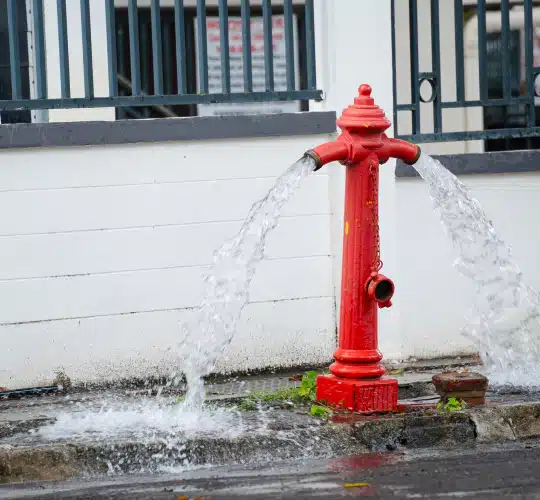
There is a widely held assumption in commercial property management that fire hydrants, like streetlights and storm drains, are city infrastructure. For the ones in the street, that is correct. For the ones on private property, it is not, and the distinction matters more than most people realise until someone from the fire department or their insurer asks for maintenance records that do not exist.
Property owners in Calgary and Edmonton are fully responsible for private hydrants on their land under NFPA 25, the Alberta Fire Code, and Calgary’s Bylaw 40M2006, and the annual inspection, flow testing, and documentation that comes with it falls entirely to them.
Municipal vs. Private Hydrants: Where Responsibility Sits
The line is the property boundary. Municipal hydrants sit in public rights-of-way and the city maintains them. Private hydrants on commercial land, industrial facilities, large retail complexes, multi-residential developments, and private roads are the property owner’s responsibility from the moment they are installed.
Annual inspection, flow testing, valve lubrication, cap and gasket replacement, drainage verification, and visibility marking all fall to the owner rather than the municipality, the fire department, or the utility provider. The properties most commonly affected are industrial sites with on-site water supply infrastructure, large commercial complexes with hydrants serving internal fire protection systems, and multi-residential developments where hydrants cover parking structures or private roads.
A well-maintained hydrant with current documentation is one less thing to think about when the fire department or insurer comes calling.
What NFPA 25 Requires for Private Hydrants in Alberta
NFPA 25 sets the standard for inspection, testing, and maintenance of water-based fire protection systems, and Alberta’s fire code adopts it in full. For private hydrants, the core requirement is annual comprehensive inspection and flow testing. Calgary has expanded its bylaw procedures to include a second fall inspection, ensuring hydrants do not freeze due to high groundwater levels or blocked drainage.
Semi-annual checks suit high-traffic hydrants or those with known drainage challenges. Both the AHJ and commercial insurers expect documented inspection records, and a property with no hydrant maintenance history on file carries a compliance gap that tends to surface at inspection time.
What Annual Hydrant Inspection Covers
Cap operation and thread condition covers all outlet caps and the threads underneath, checking for corrosion, impact damage, or deformation that would slow a fire crew down. We lubricate all moving parts with food-grade grease and replace caps and gaskets as needed.
Valve function and turn count tests the main valve through its full range. A valve that opens with resistance, grinds during operation, or requires more turns than its specification indicates has an internal problem worth addressing before winter.
Drainage verification is the most important check in Alberta’s climate. Dry-barrel hydrants drain automatically when closed, and blocked drainage ports trap water in the barrel over winter. We clear drainage ports and verify proper drainage to prevent freeze damage.
Flow and pressure testing confirms the hydrant delivers adequate water volume and pressure for fire suppression. Results get documented in BuildingReports and provide the flow data fire departments and insurers use for planning.
Visibility and access checks confirm the hydrant is clearly marked, unobstructed, and meets the two-metre clearance requirement from vegetation, fencing, and stored materials.
Fire Hydrant Maintenance in Edmonton
Edmonton’s climate and soil conditions create specific challenges for private hydrant maintenance. Valve leaks, corrosion, and low water pressure are the issues technicians see most often on commercial properties. Ground movement from freeze-thaw cycles affects drainage alignment and can shift hydrant positioning over time, and properties with older hydrant installations often have valves that have not been exercised in years.
Fire hydrant maintenance in Edmonton follows the same NFPA 25 framework as Calgary, with the added consideration of Edmonton’s soil movement patterns and the freeze-thaw cycle that is harder on drainage components than in many other Canadian cities. Activate Fire Safety handles Edmonton fire hydrant repair as part of our full inspection service. Most common deficiencies, including seized valves, blocked drainage ports, corroded caps, missing chains, and deteriorated gaskets, we resolve on-site during the inspection visit. We carry replacement caps, chains, gaskets, and valve repair tools on every service truck. Repairs requiring excavation get documented with a detailed quote and scheduled with interim compliance records so the property stays properly documented while the work is arranged.
Setting Up a Hydrant Maintenance Program
For property management companies handling multiple sites, a coordinated fire hydrant maintenance program removes the scheduling overhead of managing individual inspections and consolidates compliance documentation into a single reporting system.
A well-structured program covers annual inspections and flow testing across all sites, automated scheduling, consolidated digital reporting through Building Reports, and priority response for emergency repairs. The cost efficiency comes from shared mobilisation. Multiple hydrants get serviced in a single site visit, and multiple sites run through a coordinated program rather than separate one-off bookings. For portfolios with five or more hydrants, the program approach reduces per-hydrant cost and removes the compliance tracking burden entirely.
Frequently Asked Questions About Fire Hydrant Inspection in Calgary and Edmonton
How often do fire hydrants need to be inspected in Alberta?
Annual comprehensive inspection and flow testing is required under NFPA 25 and the Alberta Fire Code. Calgary’s Bylaw 40M2006 also requires a fall inspection for drainage verification ahead of winter. Semi-annual checks suit high-traffic hydrants or those in areas with known drainage issues. Private hydrants on commercial properties are the owner’s responsibility.
Who is responsible for fire hydrant maintenance on commercial property in Calgary?
Property owners are responsible for private hydrants on their land. The City of Calgary maintains municipal hydrants in public rights-of-way. Private hydrants on commercial, industrial, and multi-residential properties require professional inspection and maintenance by the owner under NFPA 25, the Alberta Fire Code, and Calgary’s Bylaw 40M2006.
Does Activate Fire Safety provide fire hydrant repair in Edmonton?
Yes. Activate Fire Safety provides full fire hydrant inspection, maintenance, and repair across the Edmonton metro area including St. Albert, Sherwood Park, and Leduc, with digital documentation meeting Edmonton Fire Rescue Services requirements. For Edmonton fire hydrant repair, flow testing, valve work, and drainage resolution, call 1-866-257-2579.
What does a hydrant maintenance program include?
Scheduled annual inspections and flow testing, valve lubrication, cap and chain replacement, drainage verification, visibility marking, and consolidated digital reporting through BuildingReports. Automated scheduling and single-portal compliance records make it practical for property management companies handling multiple sites.
Can fire hydrant issues be repaired during the inspection visit?
Most common deficiencies including stuck caps, seized valves, drainage problems, missing chains, and deteriorated gaskets we resolve on-site. Activate Fire Safety trucks carry replacement caps, chains, gaskets, and valve repair tools. Repairs requiring excavation get documented with detailed quotes and interim compliance records.
What is hydrant flow testing and why is it required?
Flow testing measures the water pressure and volume a hydrant delivers during emergency use. Required annually under NFPA 25, it confirms the hydrant supplies adequate water for firefighting operations. Activate Fire Safety documents all results through BuildingReports for insurer and fire department review.
Fire hydrant inspection, flow testing, and repair in Calgary and Edmonton. Call Activate Fire Safety at 1-866-257-2579.


